For information
+1 (850) 842-2200

Please wait..
Please wait..

For information
+1 (850) 842-2200
20 Dec 2025 Blogs
The moment travelers arrive in Destin, Florida, the first thing they notice is how alive the coastline feels. The emerald waters flicker with shades of turquoise, soft greens, and crystal-clear blues that shift with every hint of sunlight. Beneath the surface, schools of fish weave through the shallow water, sting rays glide quietly over sandbars, and playful dolphins rise and fall near the mouth of the Destin Harbor. Everything about this stretch of the Gulf of Mexico feels vibrant, like the entire shoreline is in motion.
Destin has always been shaped by its sea life. The fresh Gulf seafood served in restaurants, the boats cruising toward Choctawhatchee Bay, and the quiet joy of spotting sea turtles near the shore are all part of the magic that brings visitors back year after year. Yet enjoying Destin means more than experiencing its beauty. Travelers also play a role in protecting the natural habitat and understanding the local rules that keep this coastline healthy. From wildlife protections to seafood regulations, knowing how to enjoy the Emerald Coast responsibly helps preserve the place that so many families love.
Taking a closer look at Destin’s underwater world gives visitors a new appreciation for the animals that call this coastline home. It also offers a better understanding of how simple, mindful choices can help protect the waters that make Destin unforgettable.
A trip to Destin is never just a beach vacation. It feels more like stepping into a living aquarium, especially for first-time visitors who are seeing the Emerald Coast for the very first time. Beneath the waves, the Gulf of Mexico holds a treasure trove of sea life. On calm mornings near Norriego Point, bottlenose dolphins often swim in small groups close to the sand. Their sleek dorsal fins break the surface with an easy rhythm as they move between the deeper channels and the shallow edges of the harbor.
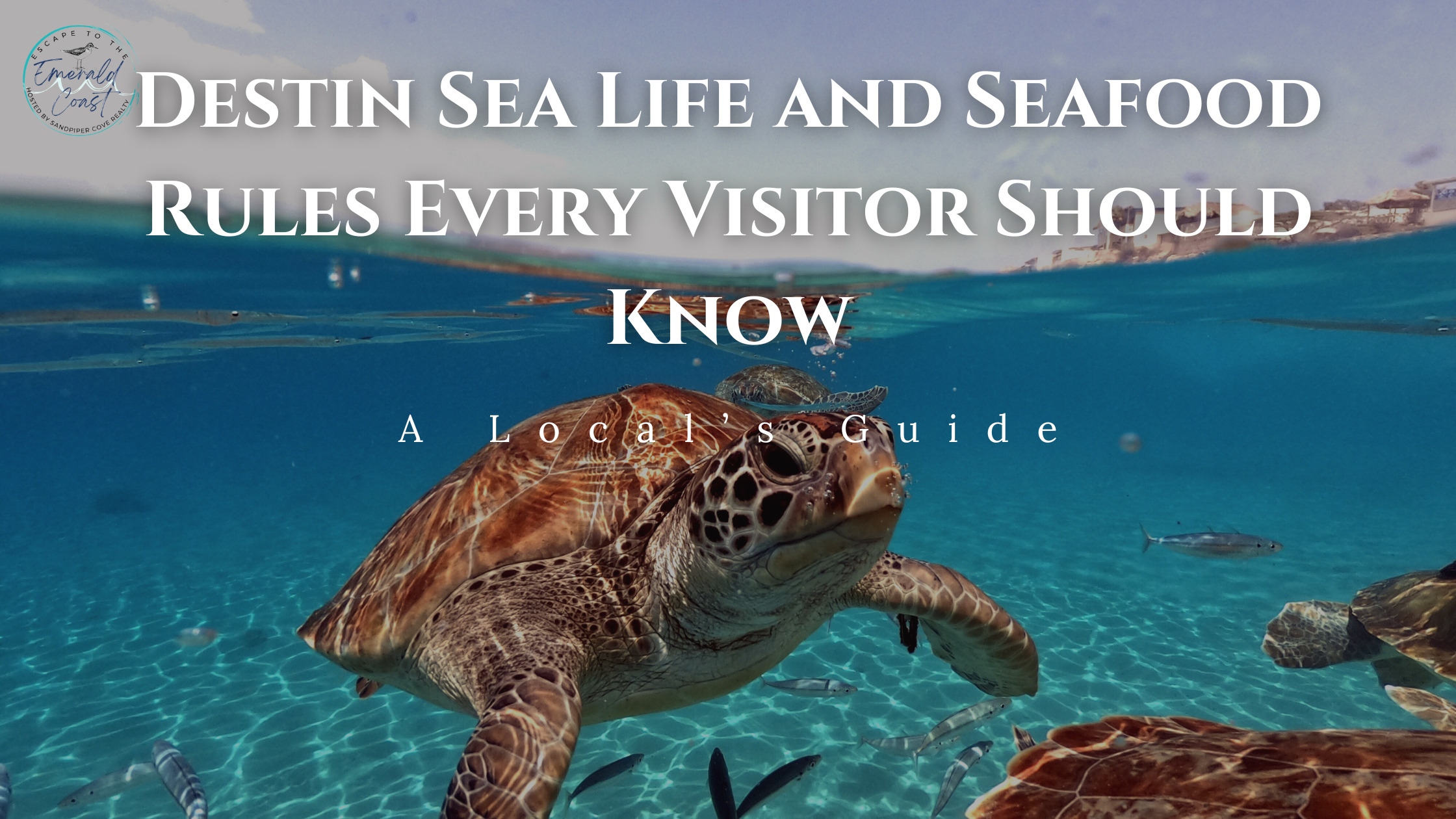
Further down the beach, sea turtles occasionally glide through clear water, especially during the warm summer months. Destin is part of a nesting zone for several species, and though many visitors never see the turtles come ashore, their tracks appear on the sand long before sunrise. During peak times, the local turtle watch teams monitor the beaches so these endangered species stay protected.
The sting rays that swim near the coast tend to stay low along the seafloor. They look intimidating at first, but they are gentle and usually glide away when they sense movement. On calm, sunny days, it is easy to spot their diamond-shaped shadows in the shallow water.
Around the jetties by the Destin Bridge, colorful reef fish drift through the rocks. Blue runners, sheepshead, sergeant majors, and angelfish dart between the stones in an underwater burst of color. For anglers who join a fishing charter or private charter, the deeper Gulf holds red snapper, grouper, amberjack, and flounder. These species are part of the reason Destin has been called the World’s Luckiest Fishing Village for generations.
Everything in this ecosystem connects. Whether it is sting rays, sea turtles, hermit crabs, or bottlenose dolphins, each creature plays a role in the health of Destin’s shores. Visitors who understand this connection often find that the beauty of the coast becomes even more meaningful.
Destin looks pristine at a glance. The white sands, emerald waters, and stunning beaches make it easy to forget how vulnerable the environment can be. Local wildlife faces challenges that are not always visible. Shoreline development affects nesting habitats. Boat traffic creates risks for marine mammals. Strong currents and shifting tides can disorient turtles and dolphins. Even loud music, bright lights, or discarded trash can disrupt sensitive species.
Small actions from visitors can make a significant difference. Touching marine animals may remove protective layers from their skin or shell. Feeding dolphins or seagulls changes their behavior and puts them at risk from boat propellers or predators. Walking too close to dunes damages vegetation that holds the coastline in place. Even digging large holes in the sand without filling them can trap baby turtles during nesting season.
The goal is never to scare visitors, but instead to encourage a respectful distance and simple mindfulness. Destin’s wildlife has flourished in recent years because visitors and locals have learned to live alongside the animals rather than interfere with them. When travelers stay aware of their surroundings, the coast remains a safe place for sea life and a breathtaking destination for everyone.
Florida has some of the most comprehensive wildlife protection laws in the country, especially along the Gulf Coast. Most of these rules are straightforward and designed to protect both visitors and animals.
Sea turtles and all marine mammals, including dolphins and manatees, are protected under the Endangered Species Act and the Marine Mammal Protection Act. That means touching, feeding, chasing, or getting too close to them is strictly prohibited. The recommended safe distance is at least 50 yards in the water. From the shore, visitors should never disturb nesting areas, which are marked with posts and signs on public beaches.
Nighttime lighting also plays a role. Bright lights disorient nesting turtles and hatchlings, so beachfront properties follow strict guidelines to shield their lights or turn off exterior lighting during nesting season. Visitors walking at night should avoid shining flashlights directly on the sand.
Sting rays do not require legal protection, but safety guidelines suggest shuffling feet when entering the shallow water. This prevents stepping directly on a ray and helps both humans and rays avoid injury.
Bald eagles, often spotted near Okaloosa Island and Fort Walton Beach, are protected by the Bald and Golden Eagle Protection Act. Most people never get close enough for interaction, but giving them space is important for their nesting success.
Every law is in place for a reason. These rules are less about restriction and more about preserving the natural beauty that travelers come to experience. Respecting wildlife keeps Destin’s environment healthy, safe, and thriving for generations.
Destin’s seafood is part of its identity, and many visitors love catching or enjoying Gulf fish. Still, harvesting seafood comes with rules that keep populations healthy. The Gulf of Mexico has specific size limits, bag limits, and seasonal closures to prevent overfishing.
Red snapper season is one of the most popular. It typically runs during summer months, though annual dates vary. Only certain days may be open for recreational fishing, and each angler must follow size requirements. Grouper, triggerfish, and amberjack also have seasonal closures that protect them during spawning periods.
Flounder has strict limits due to declining populations in recent years. Blue crab harvesting is allowed, but traps must meet specific state requirements. Scalloping is not permitted in Destin at all, since the local waters do not support a sustainable population.
Anglers who join a fishing charter usually do not have to worry about the rules. Licensed captains keep close attention on the latest information and handle all the requirements for saltwater fishing licenses. Charters also clean, bag, and label fish according to regulations, which removes guesswork for visitors.
For those fishing from the shore, pier, or a boat rental, following local rules is a responsibility that protects future generations. Harvesting seafood the right way keeps the Gulf of Mexico healthy and ensures there will always be fresh fish for travelers to enjoy.
One of the best parts of visiting Destin is enjoying seafood that comes straight from the Gulf. Restaurants across Okaloosa County and along the coast of Destin serve seasonal catches that meet state and federal guidelines. Many travelers are unaware that menus often change based on what is legal and sustainable at the time. When red snapper, flounder, or grouper is in season, it appears on the menu. When it is not, restaurants turn to other species that are fresh and responsibly sourced.
Visitors who want a Gulf-to-table experience often choose floating restaurants around the harbor, small seafood markets near grocery stores, or local businesses that support sustainable fishing. Asking a server where the fish came from is a good idea and helps visitors make responsible choices.
For those who prefer to catch and cook their own seafood, cleaning stations around the harbor offer everything needed to prepare fish after a charter trip. Many charter captains provide guidance about the cleaning process and explain which species can be kept and which must be released.
Travelers who want to enjoy seafood without worrying about breaking rules can simply choose established restaurants or charter companies that follow legal guidelines. It is the best way to enjoy a fresh meal while still supporting the ecosystem.
Destin’s shoreline offers some of the most magical wildlife moments. With that beauty comes responsibility. Visitors who understand beach etiquette help protect fragile creatures, especially during high tide, low tide, and peak times.
If visitors see a nesting turtle or fresh tracks in the sand, staying far back is essential. Flashlights, bright phone screens, and loud noises can scare turtles away from nesting. Filling holes in the sand prevents hatchlings from getting trapped. Keeping chairs, toys, and tents off the beach overnight protects turtles from obstacles.
Sting rays are common in shallow water, especially near the submerged sandbar at Crab Island. Shuffling feet helps alert rays so they can glide away. Crab Island also requires a safe distance from marine mammals and close attention to boat traffic, especially when enjoying popular activities like pontoon boat rides or jet ski rentals. Life jackets are required for all ages, and glass bottles or glass containers are not allowed.
Keeping the beach clean should always be a priority. Trash attracts unwanted wildlife and damages the natural habitat. Rip currents can form unexpectedly, so watching the flag system and weather forecast helps everyone stay safe. Beach wheelchairs are available at many public beaches for visitors who need support, and staying aware of general guidelines ensures a smooth experience.
The beach belongs to wildlife just as much as people. Small adjustments from visitors make a big difference.
Destin thrives when visitors treat the coast with care. It may not seem like a single traveler can make much impact, but every act of mindfulness adds up. Leaving the beach clean, respecting protected areas, and following fishing regulations help preserve the white sands and turquoise water that make Destin special.
Today’s travelers shape tomorrow’s coastline. Families who teach their children about the importance of wildlife protection pass down values that keep Destin beautiful. When anglers follow catch limits, fish populations recover. When beachgoers avoid disturbing dunes, the shoreline remains strong during storms.
Destin continues to grow, but its natural treasures stay alive because people choose to protect them. This partnership between visitors and nature keeps the Emerald Coast one of the most beloved destinations in Florida.
Travelers who want to enjoy the coast responsibly often look for a place to stay that respects the environment. Sandpiper Cove offers that balance. The property sits a short distance from the Gulf, with easy access to public beaches, quiet mornings by the shoreline, and a peaceful retreat where marine life is always just steps away.
Guests staying with Escape to the Emerald Coast, hosted by Sandpiper Cove Realty, can watch playful dolphins from nearby viewing spots, enjoy the emerald waters, and explore state parks like Henderson Beach State Park. Many local events, food vendors, and waterfront activities are a short distance away, making it a great option for families, couples, and snowbirds.
This community encourages visitors to follow local rules and appreciate the coastal habitat. From nearby fishing charters to the calm brackish water in Choctawhatchee Bay, staying at Sandpiper Cove makes it easy to enjoy Destin while respecting its wildlife.
Destin is more than a beach destination. It is a living, thriving ecosystem filled with sea life that depends on shared responsibility. By learning about local wildlife, observing harvesting rules, and treating the coast with care, visitors help protect the very place they come to enjoy.
Whether it is a quiet walk along the white sands, a day on a pontoon boat at Crab Island, or a sunset dinner overlooking the harbor, respecting the environment ensures that Destin stays beautiful for years to come.
When travelers are ready for their next visit, Escape to the Emerald Coast, hosted by Sandpiper Cove Realty, offers the perfect home base. Comfortable, scenic, and close to the heart of Destin’s best places, it is the ideal way to enjoy paradise while helping protect it.